Ever since Hollywood sent Brendan Fraser racing across the dunes with a torch in hand in the 1999 classic, and now with the original cast reuniting for a new chapter slated for October 2027, cinema has kept our obsession with Ancient Egypt alive.
But Hollywood didn’t invent that pull, it just tried to bottle it. The lost city of Hamunaptra was dreamed up on a studio backlot, but everything else is real, the sheer limestone cliffs, the subterranean tombs, the silence of the Sahara, and the colossal stone faces that have watched empires rise and fall.
I think that’s why Egypt gets people more surprises than they thought. You arrive thinking you know it. A pyramid, a camel, a photo for the wall. And then the trip turns out to be about everything else, a stranger handing you tea, a desert so quiet you can hear your own pulse, a stone face that has watched the sunrise for three thousand years.
It starts the way good trips do, unhurried. You land in Cairo early in the morning, and instead of the city, we drive north to Alexandria. The road runs beside the Mediterranean for about forty kilometres, and when you roll down the window the air tastes of salt.
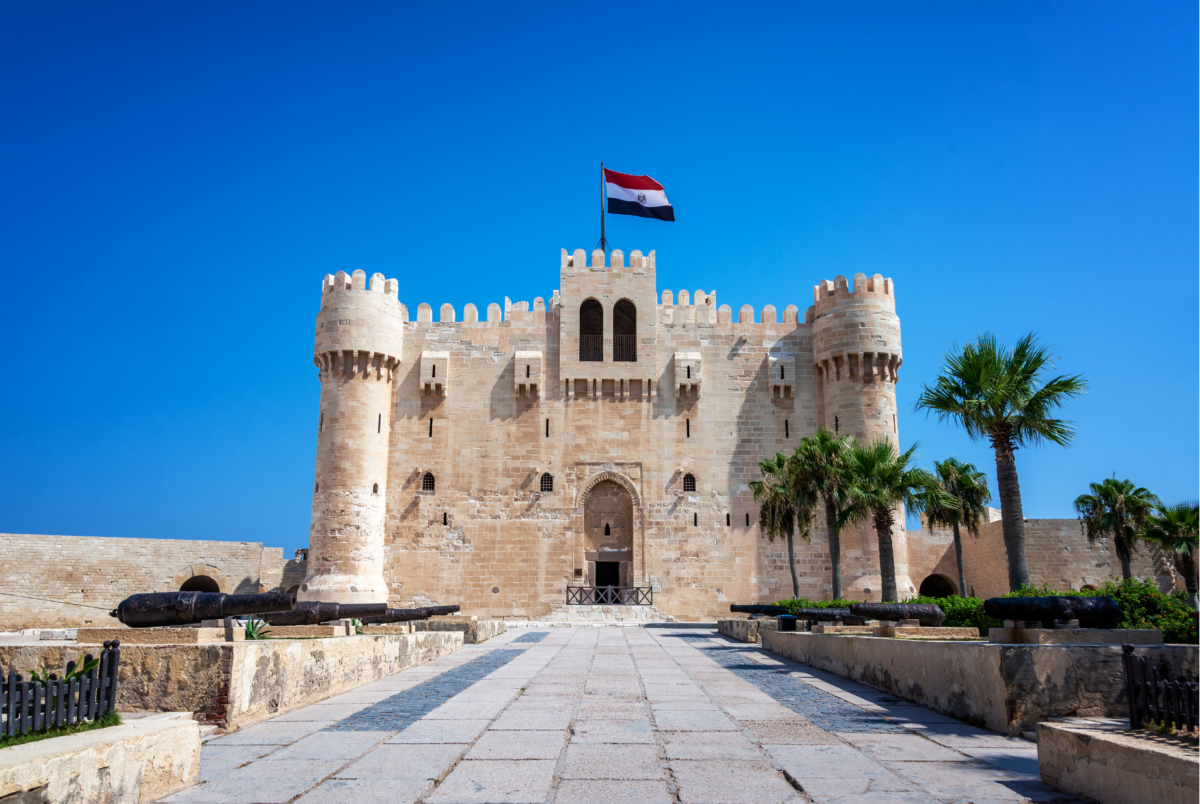
People expect Egypt to be all sand. Nobody tells them it also has a sea this blue, with old cafés, and a library that burned down and was built again. By evening you’re standing under that fort with the wind in your hair, wondering why nobody mentioned this part.
Then comes the day everyone has been carrying in their head for years. The pyramids.
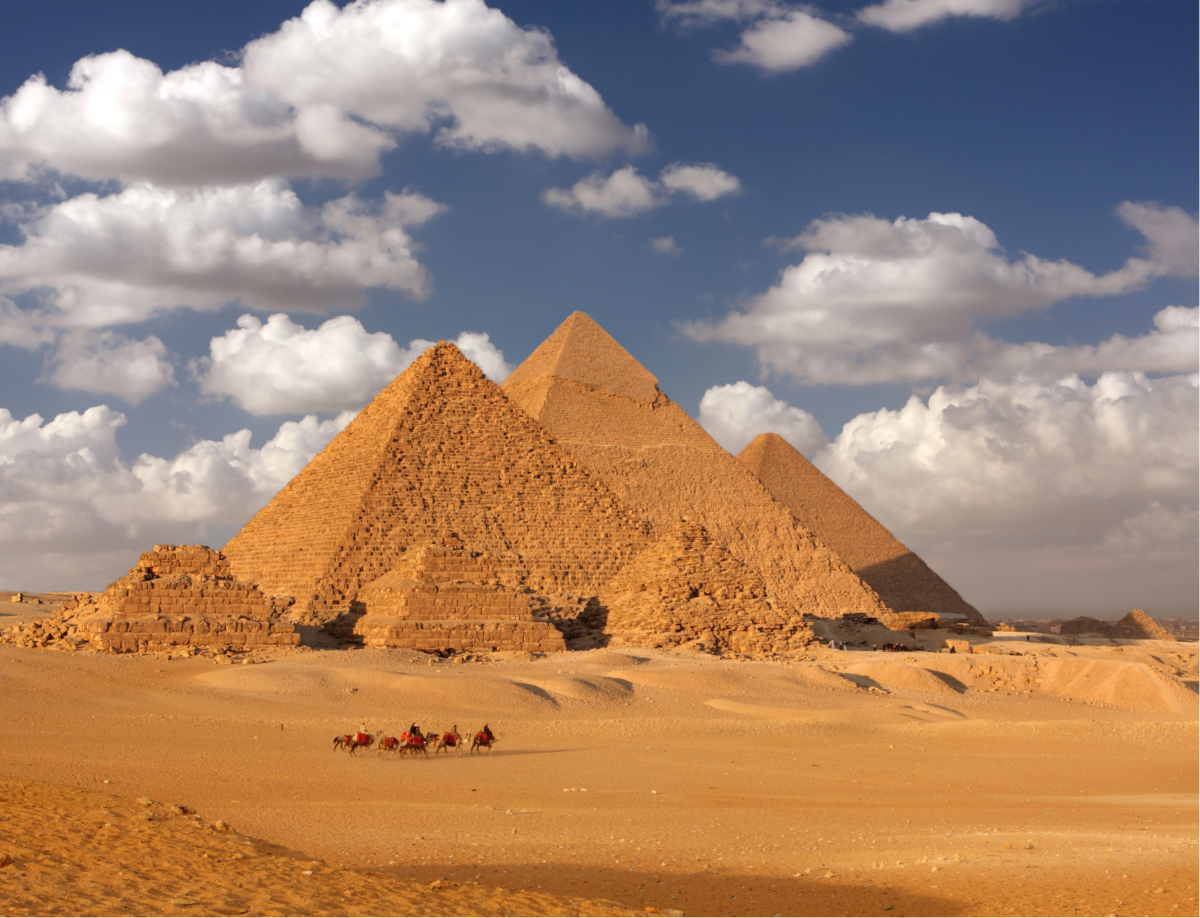
We go in daylight, and we don’t rush. This is where I’ll be honest with you. Most groups arrive, take ten photos and get herded back onto a bus. We stay. You walk right up to the stone and see how each block is bigger than you are. You stand in front of the Sphinx until you stop talking. If you want to go inside, you can, but I won’t tell you it’s worth it. The chambers were emptied, and what’s left is bare, narrow and hot. So stay outside with a cold drink and look up instead.
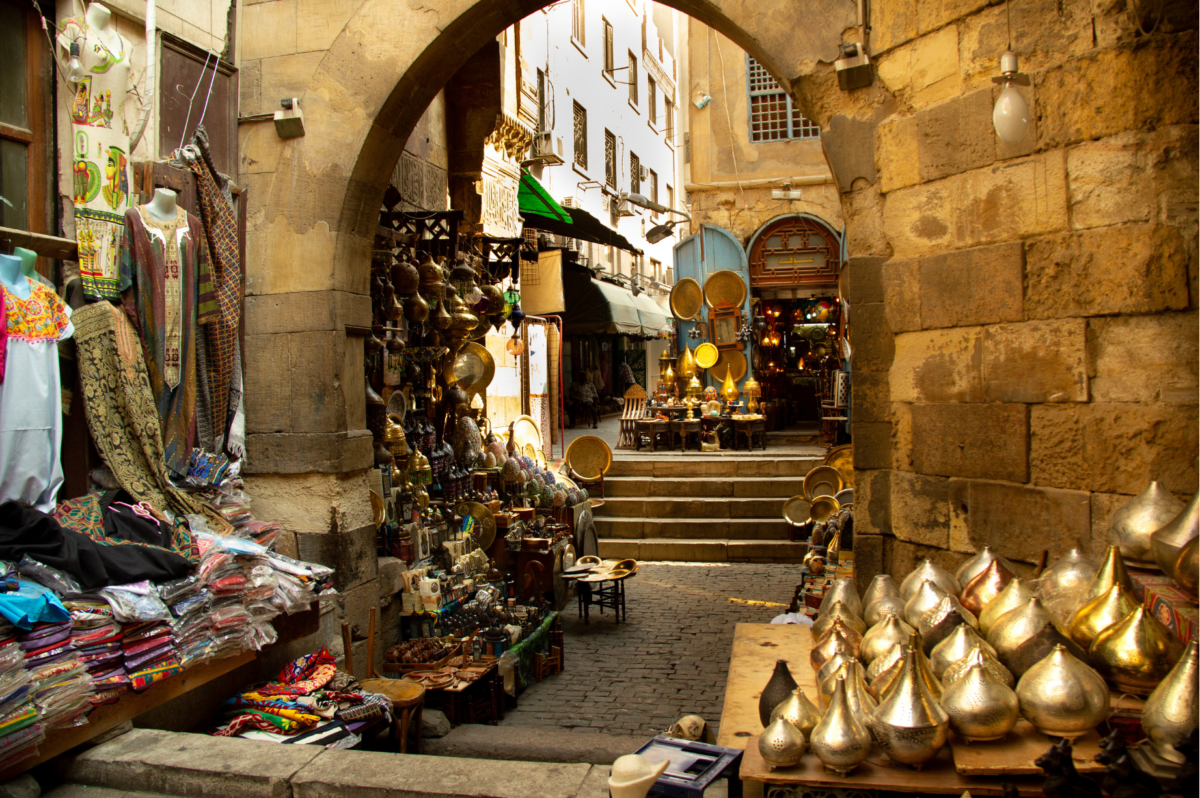
And when the buses leave, we stay. The sky turns amber, then deep blue, the lights come on, and the story of the place is told across the stones. The crowd is gone and it’s just you and the pyramids in the dark. After that, the Cairo souq is waiting. Brass lanterns, spice sellers, perfume bottles, and a shopkeeper who has already decided you’re his friend.
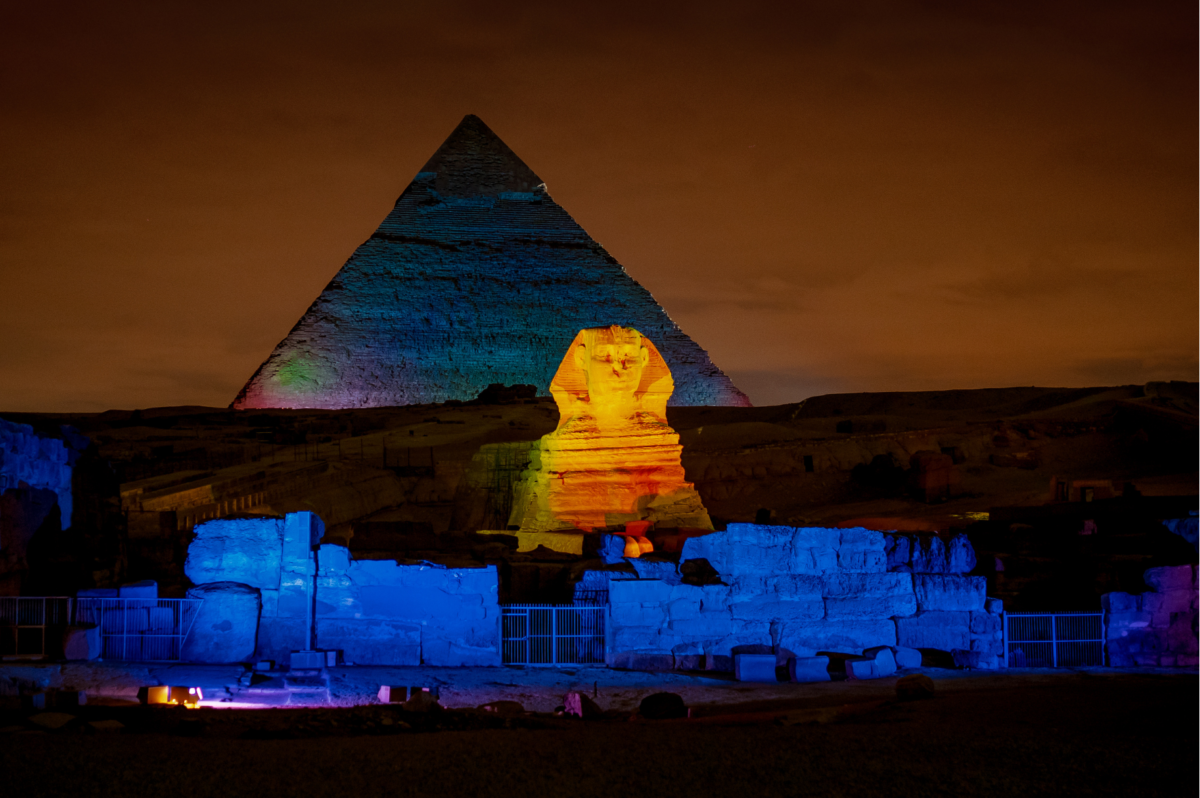
Then we do something that surprises people even more. We leave the postcards behind and drive five hours into the desert.
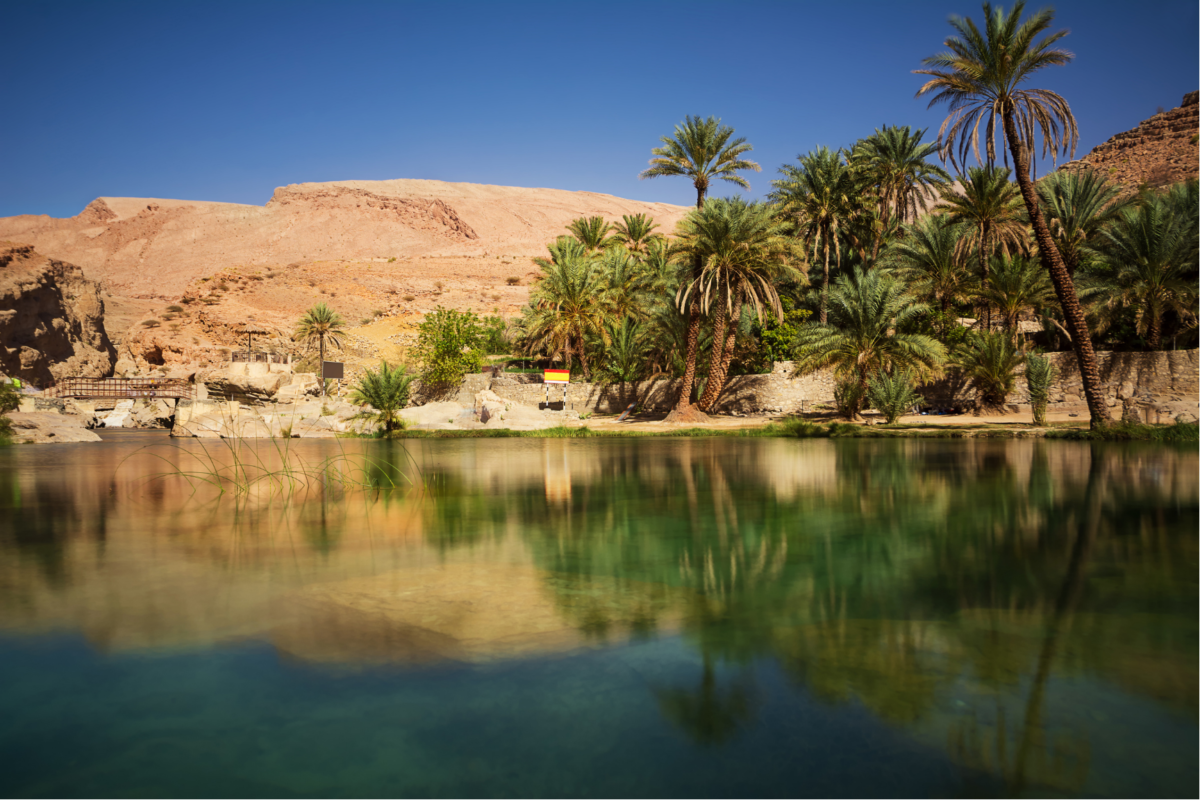
The road empties out. The towns get smaller. And then, out of nowhere, a patch of green palms, and you’re at Bahariya Oasis, in a small town called Bawiti, at the gateway to the Sahara. Your hotel has a natural hot spring. So you sink into warm water while the heat drains out of the day, and the desert goes silent around you.
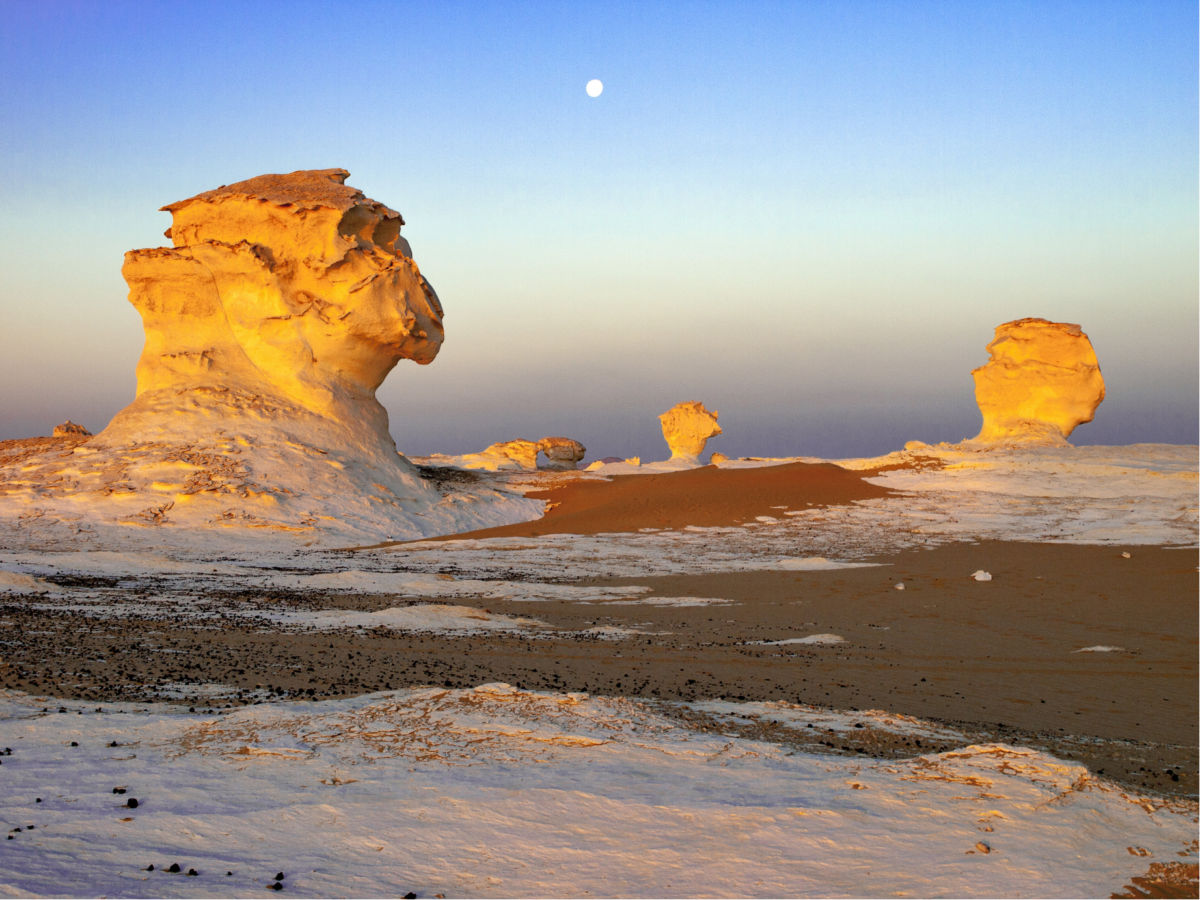
Nearby lies the White Desert, where the wind has carved pale rock into shapes that don’t look like they belong on Earth. At night there are no streetlights for a hundred kilometres, so the stars come down low and crowded. Nobody picks up a phone. There’s nothing on it that comes close.
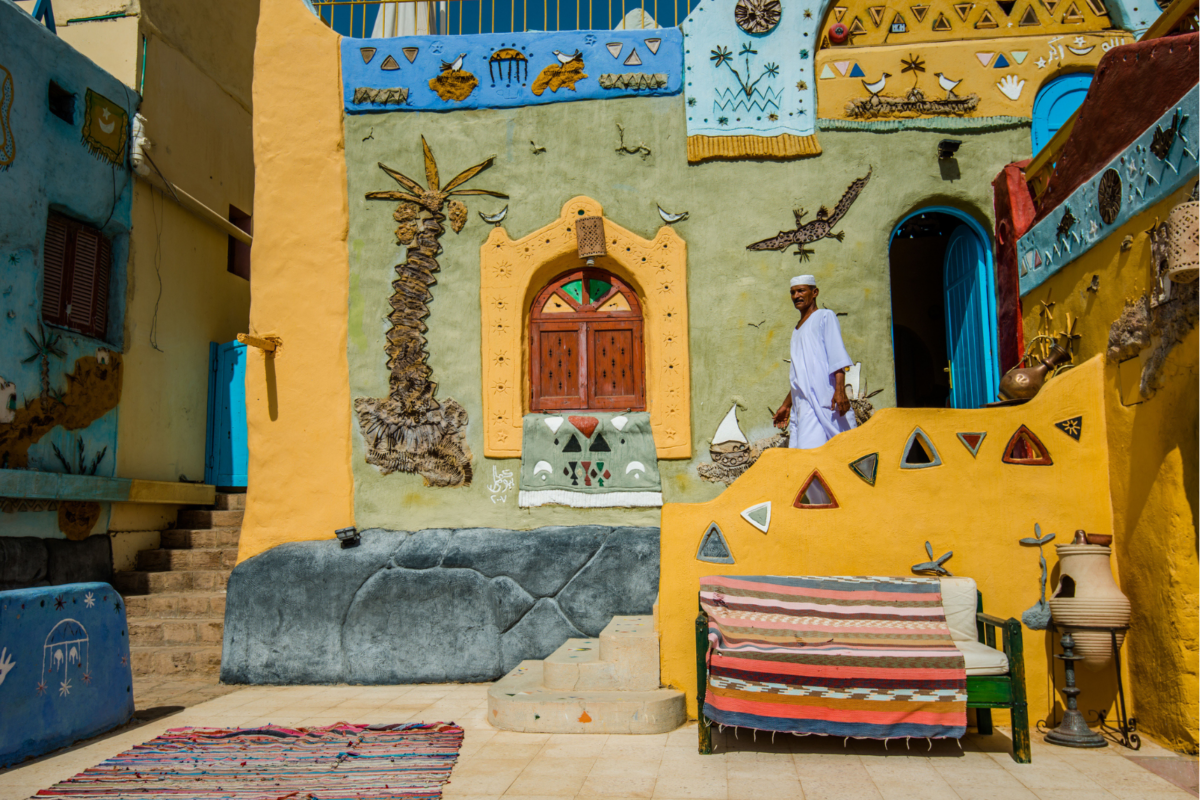
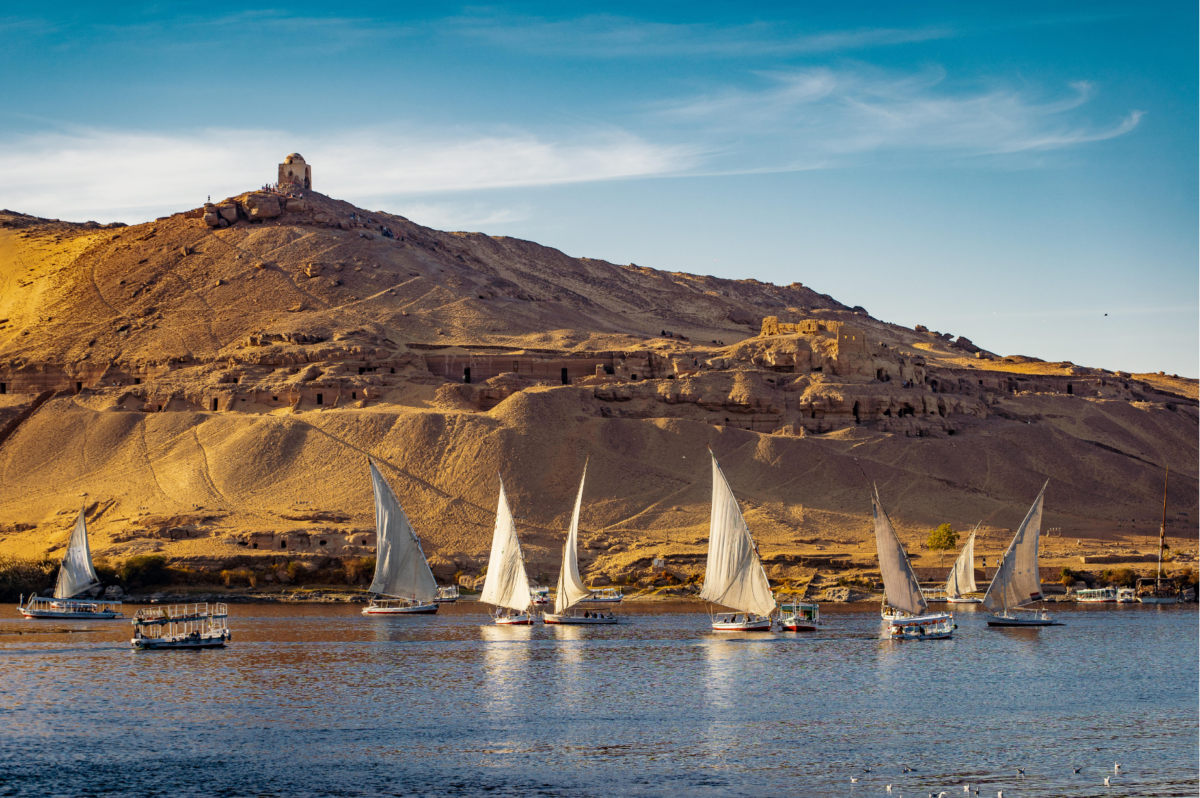
From there it’s a short flight south to Aswan, and everything slows down, because the Nile sets the pace here. We spent the first night in a hotel right on the riverbank, and in the evening we walked through the Nubian village and the Aswan souq. Spices are heaped in colourful cones, the lanes smell of cardamom and smoke. A small boat takes you across to Philae, a temple on an island that seems to float.
Then the cruise for 3 nights. Green fields, mud-brick villages, buffalo standing in the shallows. Little boats pull alongside, and by the second day you’re laughing and shouting back.
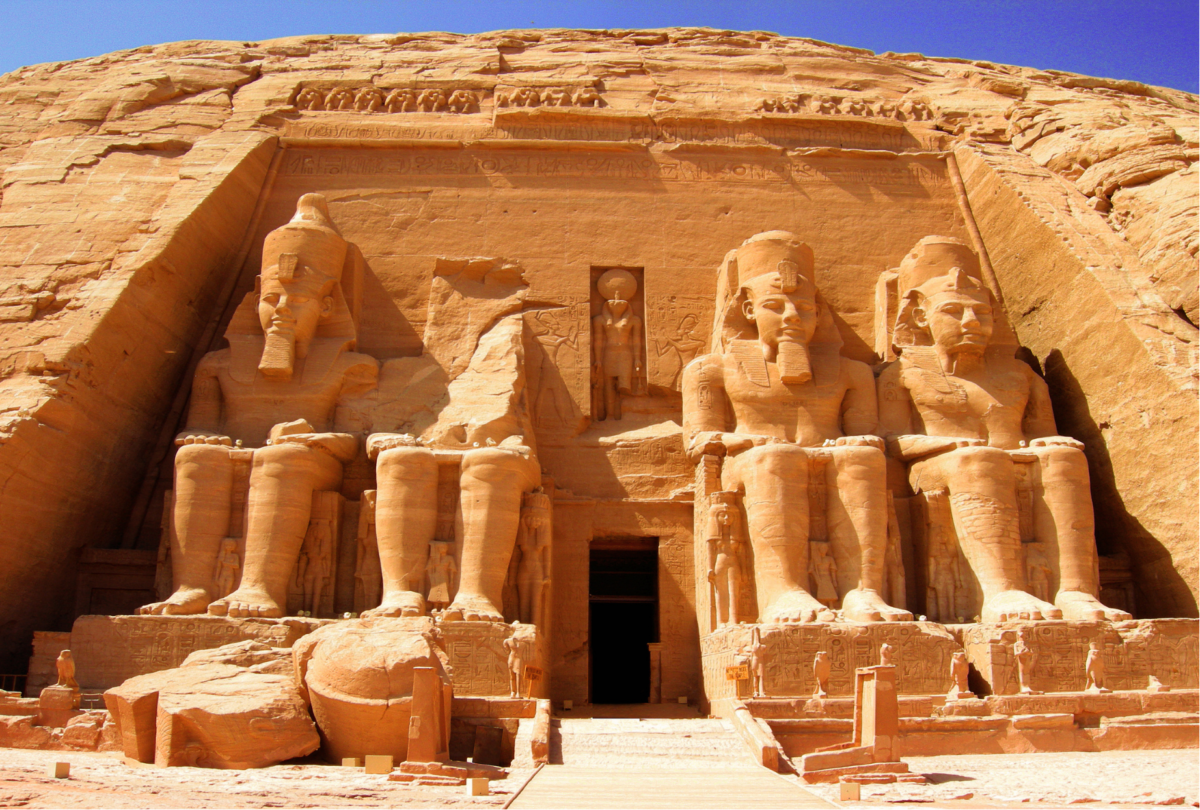
There’s one morning I always warn people about. The alarm goes off at 4 a.m. Yes, really. Everyone grumbles. We drive through the dark with boxed breakfast on our laps, nobody speaking. And then the sun comes up over Abu Simbel and four giant statues of Ramesses II slowly turn gold, one after another. Not one person in the group has ever complained about that alarm again. It goes off at 4 a.m.
Abu Simbel is one of the biggest temples in all of Egypt, carved straight into a mountain more than three thousand years ago. And it almost didn’t survive. In the 1960s, when the High Dam you saw the day before was built, the rising waters of Lake Nasser were about to swallow it. So the temple was cut into huge blocks, lifted piece by piece, and rebuilt on higher ground. You’re not just looking at a monument. You’re looking at something people refused to let disappear. And that’s what makes this special.
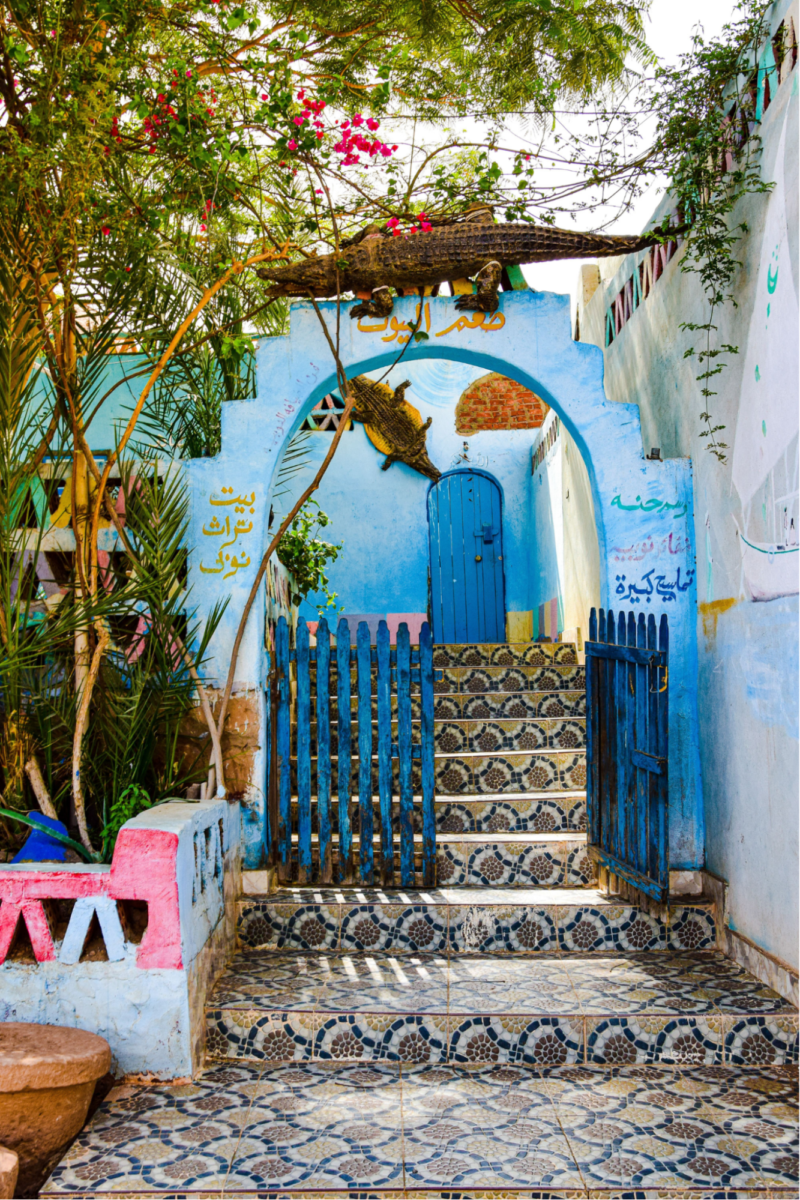
The rest of the cruise is a drift of temples and evenings. Kom Ombo glows at night, a temple shared by a crocodile god and a falcon god. The sign will take you back to the Nubian village, where above many doorways hangs a dead Nile crocodile. It’s an old local practice, a sign of respect for the river that gives these families everything.
Edfu is huge and quiet in the morning. It is the Temple of Horus, the falcon god, and it’s one of the best-preserved temples in Egypt. The great gateway still stands tall, the walls are still covered in carvings, and early in the morning, before anyone else arrives, it’s quiet enough to hear your own footsteps.The ship passes through the Esna lock, where the whole boat is slowly raised, which is oddly fun to watch. And just when you think that’s the surprise, the floating market arrives. Small boats crowd around the ship, sellers hold up scarves and trinkets, and prices fly back and forth across the water.
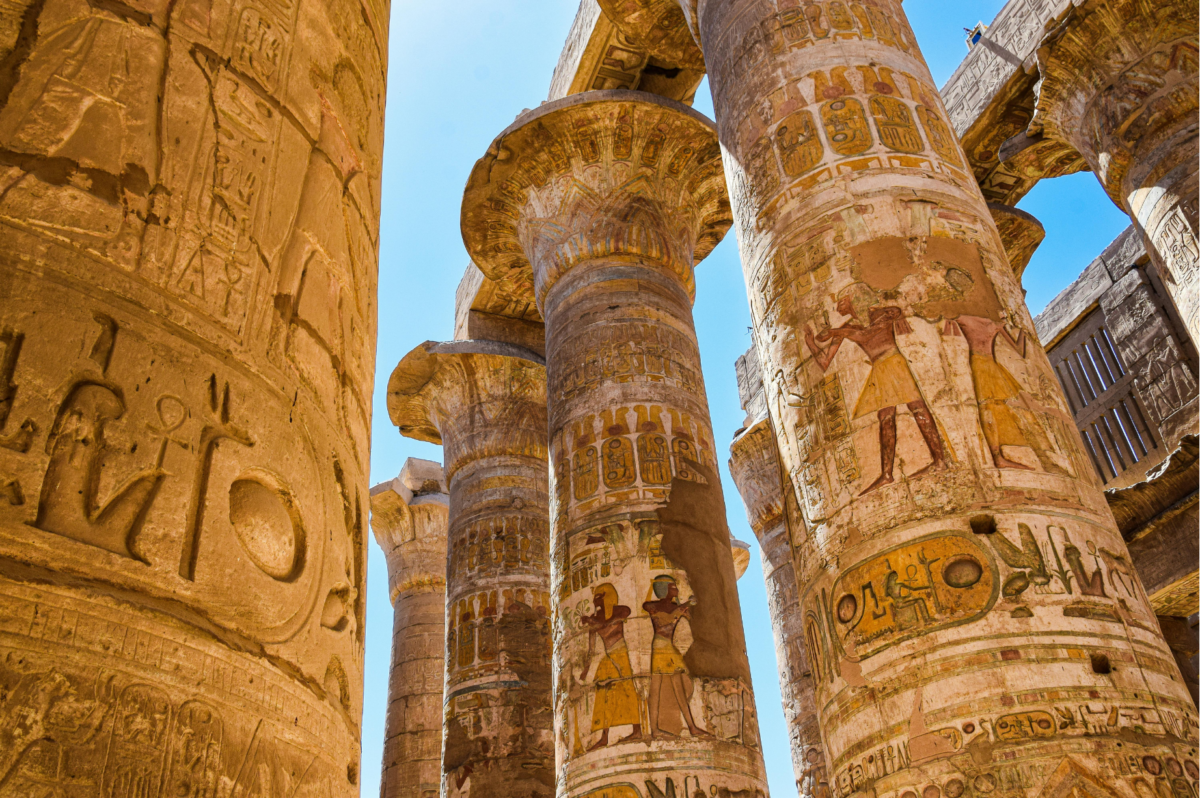
Then Luxor, and Karnak after dark, one of the biggest temple complexes anywhere, with a light and sound show that tells its story across the pillars. Afterwards we wander through the Luxor souq, loud, colourful and a bit chaotic, where you’ll bargain for scarves, spices and alabaster whether you meant to or not.
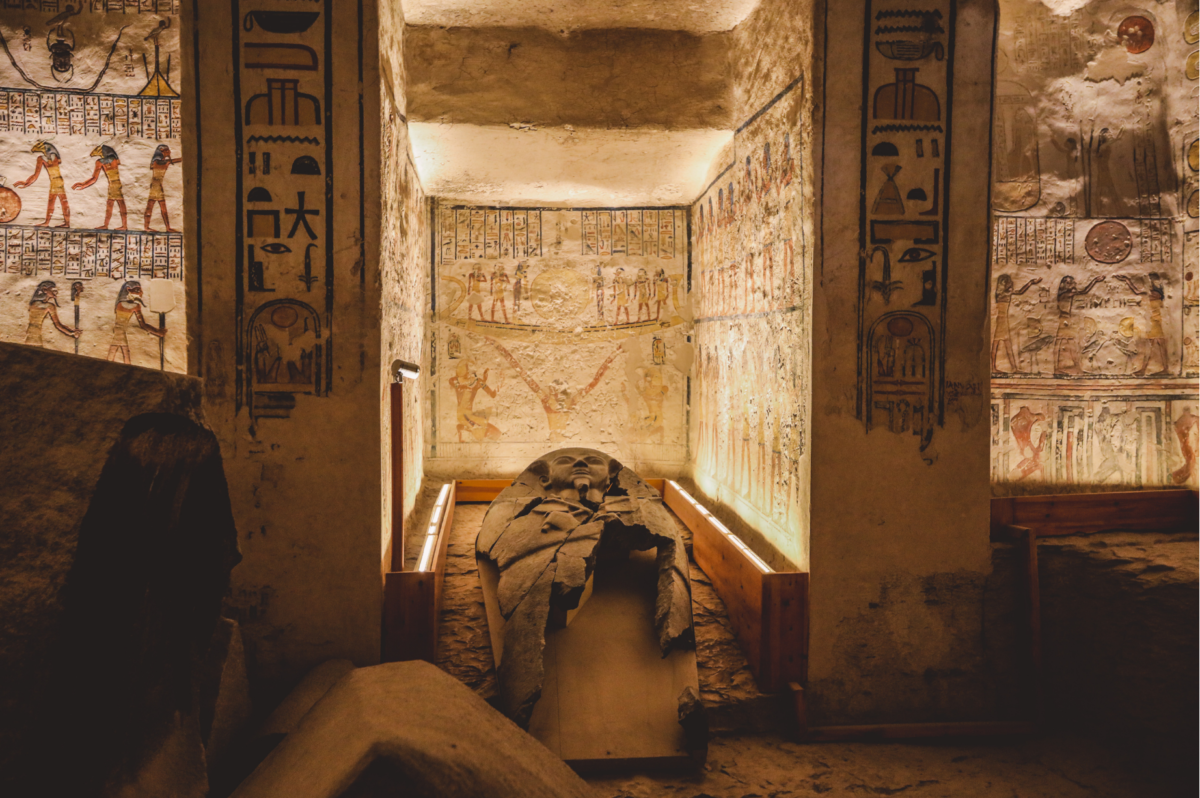
And then, the West Bank. This is the part that feels closest to the film. The Valley of the Kings is where the pharaohs were laid to rest, in tombs cut deep into the rock. You walk down a narrow passage and the walls come alive with painted blues, golds and reds, still bright after thousands of years. It’s a very different feeling from the pyramids. Those are big. These are intimate.
A few days later we’re at the Suez Canal, watching enormous ships slide past, close enough to read their names, with lunch on the table. It’s a strange, wonderful contrast, to be thinking about pharaohs in the morning and cargo ships by lunch. If the Canal Authority permits, we cross it in a local boat. So far everything has been about the past. This is about now. Look at the map and you’ll see why.
Egypt sits on a narrow strip of land between two seas, and in 1869 someone decided to cut straight through it. Today this Suez channel carries a huge share of the world’s trade.
The phone in your pocket, the car on your street and the fuel in your tank may well have passed through this gap in the sand.
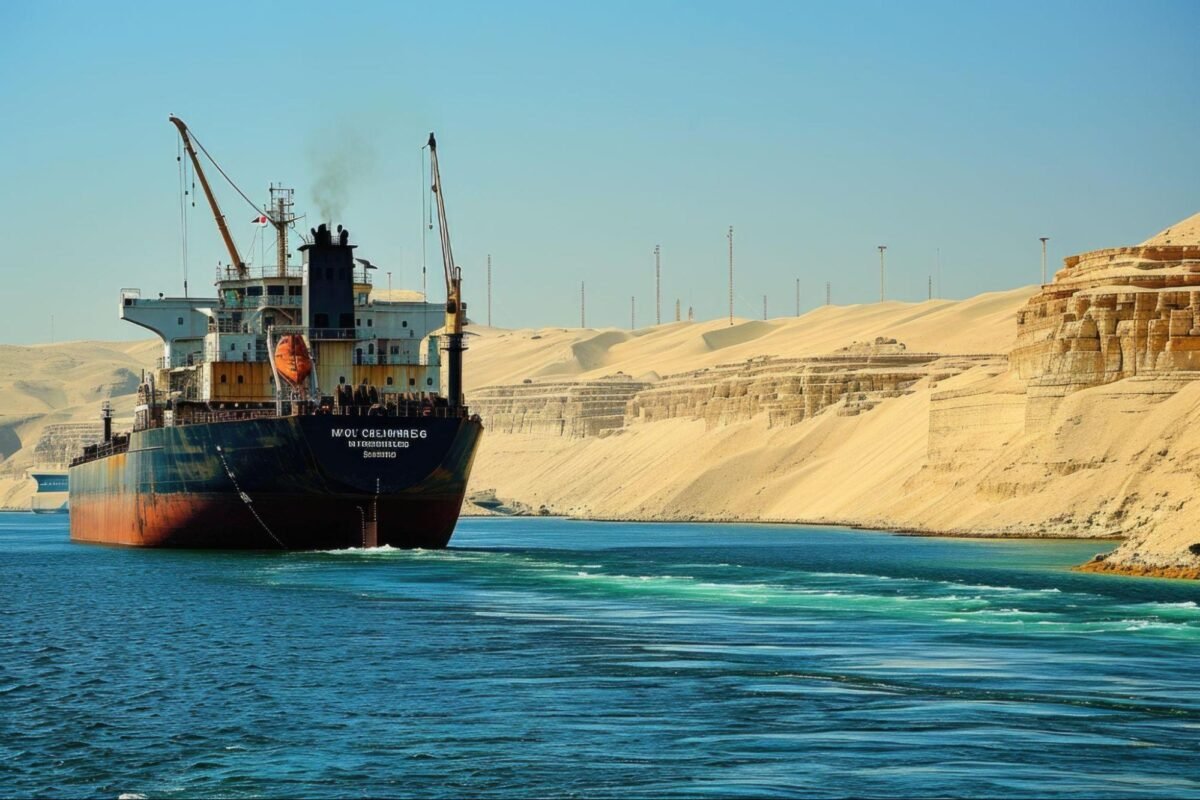
The pharaohs built Egypt’s greatness out of stone and gold. Today it also lives in this thin line of water. We have lunch beside it and maybe a few moments of existence with this old civilization.
And that’s what makes the last stop feel so right. On our final day we go to the Grand Egyptian Museum, and after days of tombs, temples and one very busy canal, you stand in front of Tutankhamun’s golden mask. The ancient treasure and the modern world meet in one trip. It feels like the last page of a book you didn’t want to finish.